

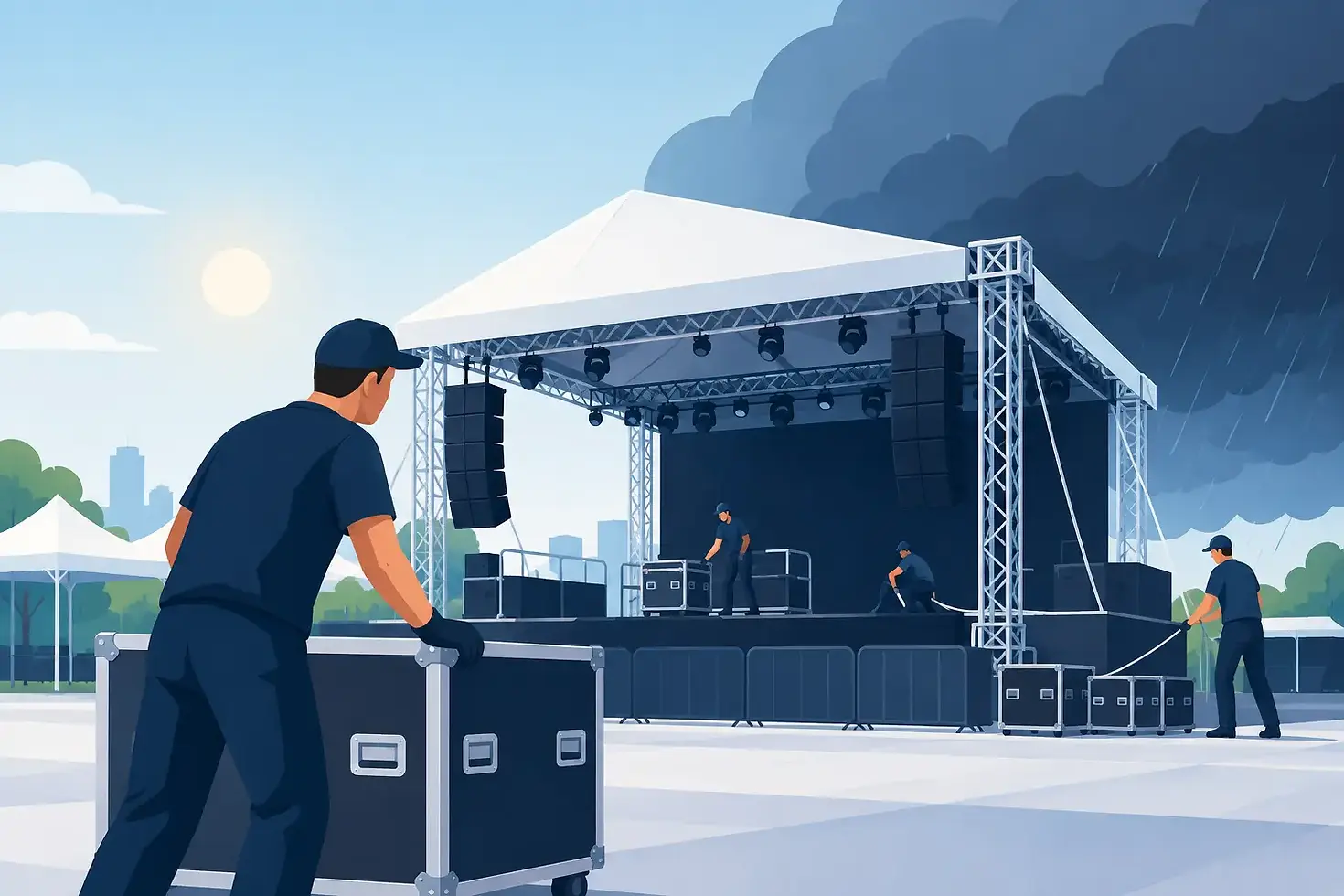
Event Fabrication That Holds Up Under Pressure
A dramatic event build has only a few seconds to make an impression, but it may spend months moving through design reviews, engineering checks, production schedules, loading docks, weather, and public interaction. That is why event fabrication is more than making a large object look impressive. It is the disciplined work of turning a visual idea into a structure that arrives intact, installs safely, performs in its environment, and supports the experience the client promised.
For agencies, event producers, exhibit designers, and brand teams, the difference matters. A concept can be visually compelling and still fail in the field if it cannot clear a doorway, fit an elevator, withstand wind, accept rigging, or be assembled within the venue's access window. Strong fabrication decisions protect the creative idea by accounting for those realities early.
What Event Fabrication Must Solve
Event work moves faster than many permanent architectural projects, but it often carries the same level of exposure. A temporary branded installation may welcome thousands of guests. A festival sculpture may face rain, UV exposure, uneven ground, and curious hands. An oversized product replica may need to ship across the country, break into manageable sections, and look flawless under camera lighting.
The fabrication partner has to solve for all of it at once: visual impact, structural behavior, material performance, schedule, budget, transport, site access, and installation. These requirements can pull in different directions. A heavier steel frame may improve rigidity but increase freight and rigging costs. A lightweight foam form may be ideal for scale and speed but need a protective finish if guests can touch it. The right answer depends on the project, the venue, and how long the build must perform.
This is where a practical fabrication mindset becomes valuable. The goal is not to overbuild every piece. It is to build intentionally, placing strength where loads, handling, and public contact demand it while using efficient materials where they make sense.
Begin With the Site, Not the Sketch
The most useful conversations happen before a design is fully locked. A rendering can establish mood, scale, and form, but fabrication requires dimensions and conditions that are rarely visible in the image. Ceiling heights, door widths, floor loading, union rules, loading dock hours, sprinkler clearances, venue egress paths, power availability, and lift access can all shape the final solution.
Outdoor projects add another layer. Wind exposure, drainage, soil conditions, anchoring options, weather duration, and local permitting requirements affect both the structure and installation plan. A form that looks simple may require concealed ballast, engineered base plates, or a custom support system to remain stable and safe.
A fabricator should ask direct questions early: Where will the piece be built and installed? How does it enter the site? Will guests touch, climb on, or photograph it at close range? Is it used for one night, one season, or several years? What happens if weather delays installation? These are not administrative details. They are design inputs.
Event Fabrication Works Best When Design and Engineering Meet Early
Creative teams need room to explore, and not every early concept needs a complete engineering package. Still, once a direction is selected, design intent must be translated into buildable geometry. That means identifying the structural core, connection points, assembly sequence, finishes, and tolerances before fabrication begins.
For a sculptural activation, the internal frame may be steel, aluminum, wood, or a hybrid system. The exterior could include CNC-cut components, formed plastics, fiberglass, scenic coatings, printed surfaces, or specialty materials selected for the desired appearance. None of those choices should be made in isolation. The shell affects weight. Weight affects support. Support affects transport. Transport affects how the piece breaks down and how its seams are concealed.
This coordination is especially important when a project includes moving parts, integrated lighting, interactive features, or architectural interfaces. A large illuminated letter installation, for example, needs more than a clean exterior finish. It needs cable paths, access for service, heat considerations, mounting details, and a plan for protecting electrical components during shipping and installation.
The best results come from respecting both sides of the work. Creative ambition sets the target. Engineering and fabrication determine how that target can stand, travel, and perform without losing its character.
Choose Materials for Real Conditions
Material selection is often where budget, durability, and appearance meet. There is no universal best material for event fabrication. The best choice is the one that meets the use case without creating unnecessary cost or risk.
EPS foam can create large, lightweight forms efficiently, particularly when paired with hard coatings and scenic finishes. Wood can be versatile for environments, display structures, and shaped components. Metal is often the right choice for load-bearing frames, repeat-use components, and outdoor structures. Fiberglass and composite materials can provide smooth, durable surfaces for complex sculptural forms. Acrylic, polycarbonate, and specialty plastics offer transparency, glow, or precise graphic integration.
Finishes deserve the same attention as the substrate. A surface intended for a controlled indoor launch may not need the same coating system as a public outdoor installation. High-touch areas need finishes that resist scuffs and can be cleaned. Exterior pieces need protection from moisture, sunlight, and temperature swings. If a project will be photographed closely, seams, fasteners, and touch-up plans should be considered before the final coat goes on.
Plan Transport and Installation While the Piece Is Still on the Floor
A finished build is only successful when it reaches the venue in the same condition in which it left the shop. This is why transport planning belongs in the fabrication process, not at the end of it.
Large structures may need to be designed in modules sized for trucks, freight elevators, dock access, or narrow corridors. Each module needs reliable connection details, clear labeling, and protection for finished surfaces. If an installation requires cranes, forklifts, chain motors, or specialty rigging, the load paths and pick points need to be planned and communicated well before show day.
Installation sequence matters just as much. A team may have a four-hour overnight window to unload, assemble, level, finish seams, and clear the space for the next vendor. In that scenario, a clever connection detail that takes too long to align is not clever enough. Build methods should support safe, repeatable field assembly by the crew assigned to do the work.
Contingency planning also pays off. Spare finish material, touch-up kits, replacement hardware, and documented assembly instructions can prevent a minor transit issue from becoming a visible event problem. For complex builds, a pre-install test fit in the shop can reveal alignment issues while they are still inexpensive to fix.
A Better Brief Produces a Better Build
Clients do not need to arrive with every technical answer. They do need to share the information that affects the build. The strongest project briefs include the approved concept, target dimensions, event dates, venue details, intended audience interaction, budget range, delivery location, and installation responsibilities.
It also helps to be candid about priorities. Is the primary goal a monumental visual moment, a premium close-up finish, a fast one-time installation, or a durable asset that will tour? Those goals can coexist, but they may require different allocations of money and time. Clear priorities allow the fabrication team to recommend practical trade-offs before the project reaches a costly stage.
At We Build the Amazing, that conversation is treated as part of the work, not a hurdle before the work. Great physical experiences depend on decisions that connect concept, construction, and the conditions waiting at the site.
The next time a bold event concept lands on the table, ask one question before approving the final rendering: what will it take for this to arrive, stand, and perform exactly as intended? That answer is where an unforgettable build begins.


Comments